

" Do I Really Need to Use a Lock Screen?": An Evaluation of Indonesian Smartphone Users
Published in 7th International Conference on Information and Communication Technology (ICoICT) 2019
Nowadays, smartphone diversifies its functionality to store users' personal data including their sensitive information, which needs protection from unauthorized access. Lock screen is the simplest security method to guarantee the security of smartphone. This study aims to determine the factors that affect users in using lock screen as a lock on their smartphone by using 8 variables adapted from previous research. Data analysis used is Structural Equation Modelling (SEM) analysis. The results of this study suggest that the factors that influence users in using lock screen on their smartphone are trust, attitude and perceived risk.

Lizard Cipher for IoT Security on Constrained Devices
Published in International Journal of Advanced Computer Science and Applications, Vol. 10, No. 11, 2019
Over the past decades, security become the most challenging task in Internet of Things. Therefore, a convenient hardware cryptographic module is required to provide accelerated cryptographic operations such as encryption. This study investigates the implementation of Lizard cipher on three Arduino platforms to determine its performance. This study is successful in implementing Lizard cipher on Arduino platform as a constrained devices and resulting 0.98 MB of memory utilization. The execution time of Lizard cipher is compared among Arduino variants, i.e Arduino Mega, Arduino Nano and Arduino Uno with ANOVA test. Tukey’s HSD post-hoc test reveales that the execution time is significantly slower in Arduino Mega compared to Arduino Nano and Arduino Uno. This result will help IoT security engineers in selecting a lightweight cipher that is suitable for constraints of the target device.

The Implementation of zk-SNARK HH Authentication on IoT Protocols
Published in International Journal of Online and Biomedical Engineering(iJOE)
CoAP and MQTT are messaging protocols in the application layer of the IoT architecture. Both protocols, in general, have not been equipped with certain authentication schemes to cope with the network security gap. Without an authentication mechanism, the protocol is prone to mand-in-the middle attacks. Addressing this issue, the present study attempted to implement an authentication scheme using zk-SNARK Homomorphic Hiding (HH). This authentication mechanism does not require a token exchange and is safe from an eavesdropper. In this study, zk-SNARK HH was implemented to CoAP and MQTT protocols. The performance of both protocols was compared. The result of the study indicates that zk-SNARK was successfully implemented in CoAP and MQTT protocols. The result of the independent sample t-test presented a significant difference in COAP and MQTT memory usage where MQTT required larger memory. Regarding time execution, no significant difference was noticed. To conclude, CoAP may serve as an alternative when zk-SNARK is implemented in a device with limited memory as it requires lower memory and has an execution time that is not significantly different from MQTT.

Investigating mobile users’ intention: Technology acceptance and privacy perspectives
Published in Sixth Information Systems International Conference (ISICO 2021)
Smartphones are essential device in most people's live nowadays. There are many benefits offered by smartphones, such as: the ability to access the internet, e-mail, access social media, etc. Their advanced features and ease of use enhances their functionality including storing contacts, photos, videos and other sensitive information. Thus, smartphones become attractive target for hackers especially with regard to get unauthorized access to sensitive data from users that violates their privacy. This paper investigated the impact of users’ intention in using a smartphone despite privacy threats that can occur. Questionnaires were distributed to 300 respondents who were actively using a smartphone to obtain the study data. The level of relationships among the constructs were analysed using Structural Equation Modelling (SEM). The results of this study indicate that the factors that influence users in using a smartphones are mobile users’ information privacy concern, perceived ease of use and perceived usefulness.

Protecting Facebook Password: Indonesian Users’ Motivation
Published in Procedia Computer Science (The Fifth Information Systems International Conference 2019)
Facebook is one of the social networking services that have users around 1.86 billion active users spread all over the world. To be able to enjoy various services from Facebook, a user is required to have a Facebook account. In the registration process to create a new Facebook account, the user is prompted to create a password to protect his account. The password policy service applied by Facebook requires all users to create and use a password for their Facebook account in accordance with the policies. This study aims to analyze user behavior with case study of Facebook account by using 12 construct variables adapted from Protection Motivation Theory (PMT). Data collected from Facebook users of 300 respondents. Data analysis method used is Structural Equation Modeling (SEM) analysis. From the research result, the factors that influence Facebook users’ intention to protect their account are perceived vulnerability, fear, response efficacy, response cost, subjective norm, prior experience with safety hazard, threat susceptibility and personal responsibility. Meanwhile, they ignore the threat sverity, coping self-efficacy and security support from others while protecting their Facebook account.
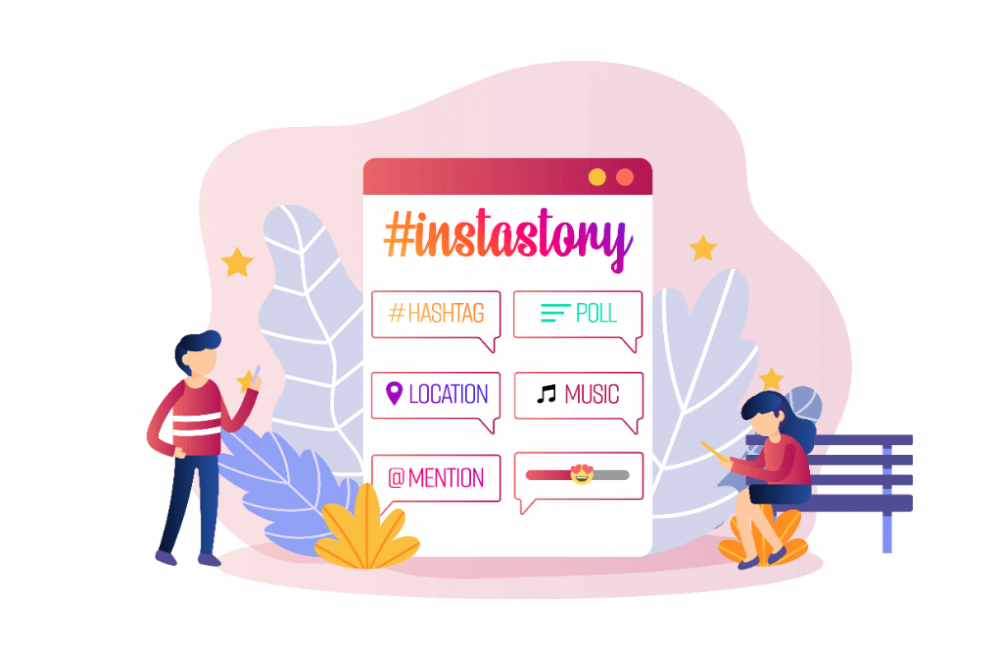
Empirical Study of #instastory
Published in Procedia Computer Science (The Fifth Information Systems International Conference 2019)
Instagram is a social media which provides services that enable users to share photos or videos via its features called Instastory. Indonesia as the largest Instagram user in Asia Pacific region is worth studying. There are several factors affecting Instagram users to share their photos or videos, such as they are enjoying to represent themselves in an online world so that the can get connected virtually or even build new relationship. Apart from the benefits, there is hidden risk that may occur such as the misused of the personal information they have shared that may lead to privacy violation. The main objective of this study is to analyze the factors that affect Instagram users in sharing their videos or photos via Instastory by using ten latent variables and one second-order variable. The data are collected from 300 respondents who are active users of Instagram. Data from respondents are analyzed using Structural Equation Modelling (SEM) model. The results of this study shows that the factors that affect self-disclosure on Instagram via Instastory are self-presentation, enjoyment, perceived collectivism, new relationship building, Internet Users Information Privacy Concerns (IUIPC) and perceived risk.
Lizard Cipher for IoT Security on Constrained Devices
4 tahun yang lalu
The Implementation of zk-SNARK HH Authentication on IoT Protocols
4 tahun yang lalu

Facebook Privacy Concerns among High-School Teens
7 tahun yang lalu

Security Intention: Creating and Protecting Google Password
7 tahun yang lalu

“Can I Trust You, Doc?” : User Perception Of Online Health Information
7 tahun yang lalu
